Severe traumatic brain injury doesn’t fit into a neat, short recovery timeline—but most healthcare systems do. When traditional therapy ends, families are often left on their own, unsure of what to do next. Without ongoing, specialized support, progress can slow, stall, or feel out of reach. Recovery isn’t over—it’s just under-supported.
At EA Therapeutic Health, we understand what’s possible when people are given the right environment, time, and expert guidance to keep going.
Key Challenges:
Care often ends too early due to insurance limitations
Lack of structured, long-term recovery support for severe TBI
Families are left without guidance, direction, or consistency
.jpg?width=1080&height=1350&name=Recovery%20After%20TBI%20Is%20Possible%20(2).jpg)

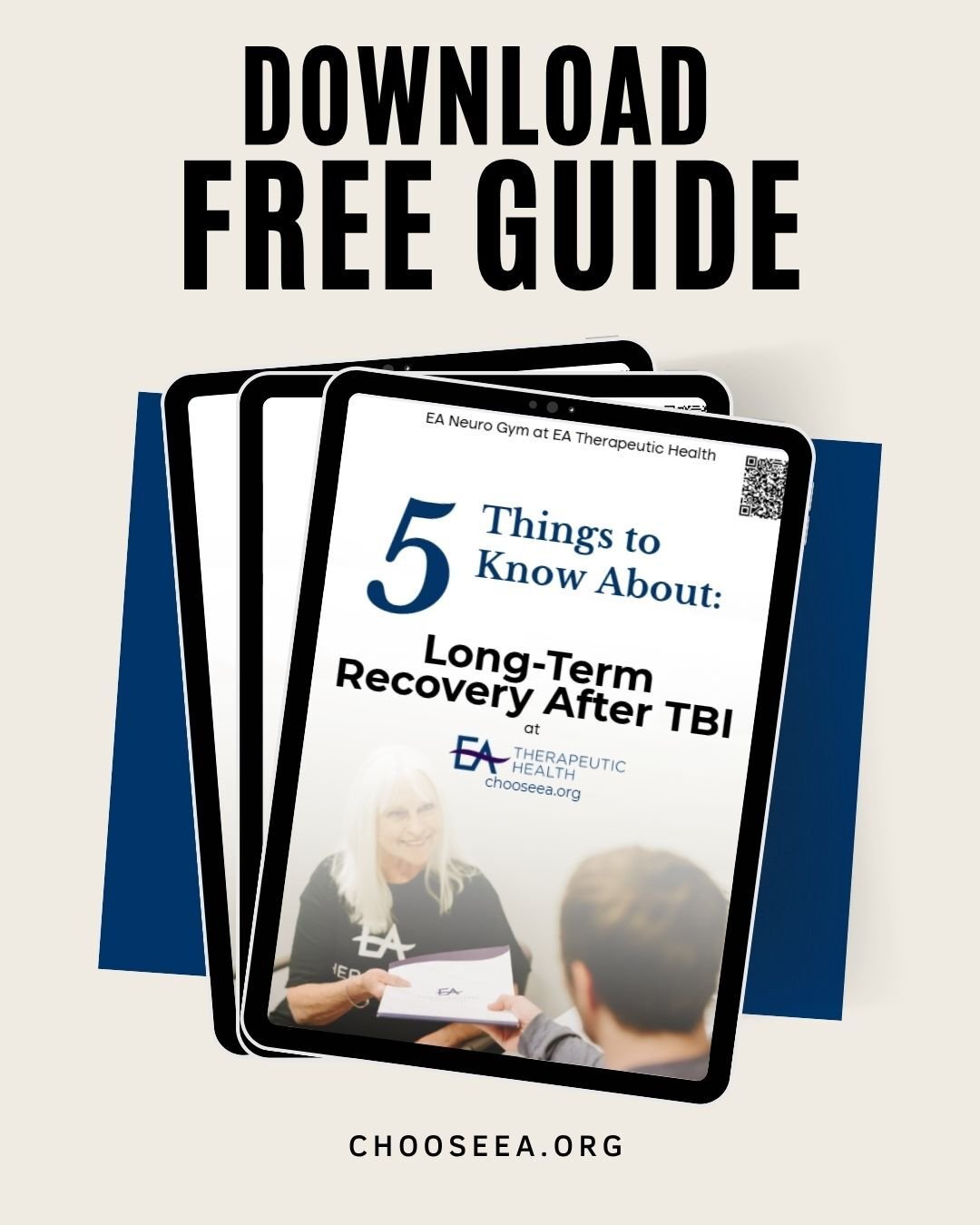
5 Things to Know About Long-Term Recovery After TBI
Recovery after a severe TBI is not linear, and understanding that changes everything. This free guide breaks down what most people aren’t told about long-term recovery, including what actually drives progress months or years after injury. If you’re feeling stuck or unsure what to do next, this is your starting point.
Built from our experience working with complex neurological conditions, this guide gives you clarity and direction.
What You’ll Learn:
Why recovery continues far beyond traditional timelines
What actually drives progress in the brain and body
How to take the next step toward structured, long-term care